Image

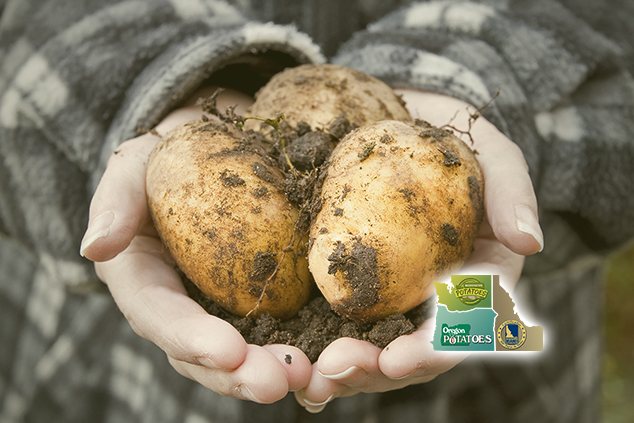
Northwest Potato Research ConsortiumCooperative Effort of the Potato Commissions of ID, OR, & WA

Research & Extension for the Potato Industry of Idaho, Oregon, & Washington

Begun in 2001 as a research and extension communication tool for the Washington State potato industry, Potato Progress has since 2012 broadened its scope to formally serve the Northwest potato industry.

Recently Released Articles

An eddy covariance tower

Better Observations and Models for Irrigation Water Budgets in an Uncertain Water Future

This winter was a stark reminder of what the future may increasingly look like for irrigated agriculture across the Pacific Northwest. Across the Columbia River Basin, which sustains irrigated agriculture from Washington's Columbia Basin through Idaho's Snake River Plain, snowpack has ranked lower than 98% of years on record. In the Yakima Basin, snow water equivalent (water stored in mountain snow) on March 1 stood at just 33% of average, with junior water rights holders projected to receive only 44% of their full entitlements this season (Reclamation, March 2026).

Published:

April 6, 2026

Tuber Soft Rot Graphs

Tuber Soft Rot Potential and Bruising from Storage to Packaging

This research study, conducted by Miller Research and the University of Idaho, examined how handling and packing affect potato tuber rot potential and bruising. Soft rot and various types of bruising, such as blackspot and shatter, were measured as tubers moved from storage to packing facilities. Results indicate the act of washing potatoes significantly increased tuber vulnerability to decay compared to their unwashed state. Thorough or partial drying of tubers after washing was more effective than no drying or the use of disinfectants for preventing rot.

Published:

March 31, 2026

Thiamin Uptake Image

Can Potato Yield and Quality Be Increased by Optimizing Thiamin Uptake Efficiency?

The potato varieties Clearwater Russet and Snowden were grown in pots containing Adkins Series soil amended weekly with increasing concentrations of thiamin. Thiamin was added from shortly after emergence until near harvest. Under optimal greenhouse conditions, however, the addition of thiamin had no effect on tuber yield, tuber number per plant, or tuber size distribution in either cultivar. These findings indicate that soil thiamin amendment alone is insufficient to increase yield under these conditions.

Published:

March 1, 2026

Dynamic Content Image

Potato-related research at USDA-ARS laboratories

Discover how USDA-ARS scientists are tackling the biggest challenges facing the U.S. potato industry, from pest management to developing new, resilient cultivars. This article explores innovative research efforts across multiple ARS locations, highlighting breakthroughs in breeding, post-harvest quality, and disease control. Learn how coordinated nationwide programs are driving solutions that benefit growers, consumers, and the environment. Dive in for an inside look at the future of potato production and protection.

Published:

January 13, 2026

Dynamic Content Image

Biological Control in Potato with the Whirligig Mite: Prospects and Challenges

The article explores the potential of the whirligig mite, Anystis baccarum, as a biological control agent for arthropod pests in potato fields. It discusses the limitations of using natural predators, as they may not be effective against all pests. The research highlights the whirligig mite's role as a consistent predator of the potato psyllid, along with its identification, distribution, and seasonal life cycle. While promising for pest control, sustaining its presence in potato fields may require habitat conservation or targeted efforts.

Published:

June 1, 2025

Dynamic Content Image

2025 Washington State Commercial Seed Lot Profile and Potato Field Day Preview

‍Washington State University, in collaboration with the Washington State Potato Commission, has been conducting the Commercial Seed Lot Trial for over six decades to evaluate the quality of potato seed. The program includes a training session designed to improve plant disease diagnostics, supported by experts from multiple states. In recent years, there has been a decline in the number of submitted seed lots, with 190 submitted for the 2025 trial, compared to 281 in 2024. The upcoming potato field day will feature discussions on seed lot performance and alternatives to neonicotinoids in managing virus transmission.

Published:

June 1, 2025

Northwest Potato Research Consortium

Raina Spence
Director, NWPRC

Contact Us